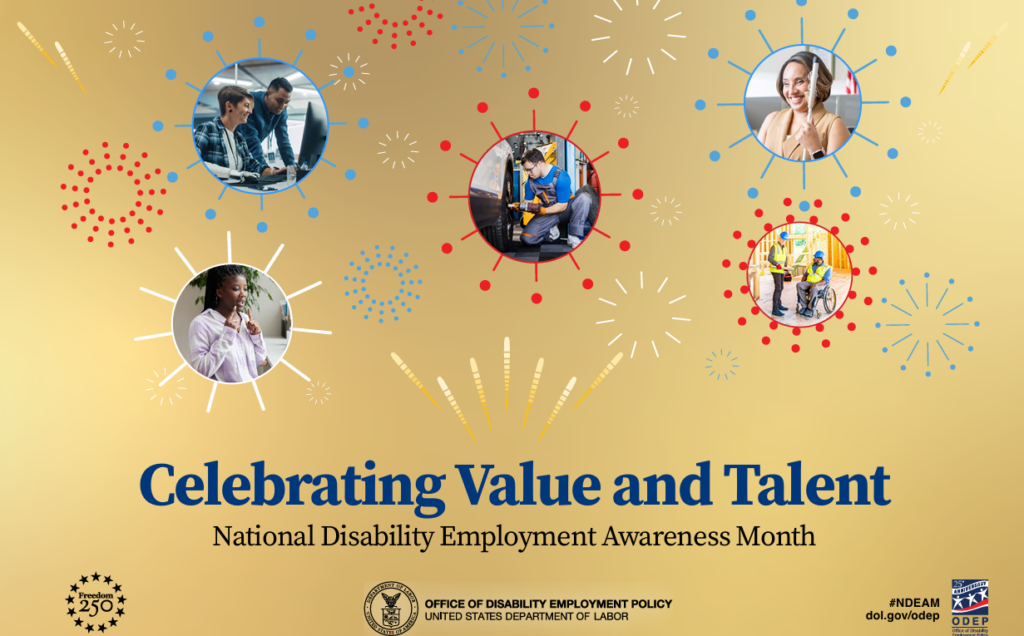
Beyond the Numbers: Understanding the Disability Employment Gap
Every October, National Disability Employment Awareness Month (NDEAM) prompts our annual assessment of workforce trends and dynamics that impact people with disabilities. We get to look at the latest metrics, evaluate and adapt to hiring trends, and celebrate genuine milestones. As we move past the midpoint of the decade, it is worth looking back at where things stood at the start of the 2020s—when Bureau of Labor Statistics data showed that only 20.5% of adults with disabilities were engaged in the workforce, compared to 68% of adults without disabilities who were participating in the labor market.
More than six years later, current labor market figures reveal notable shifts and persistent systemic realities:
- Top-Line Trajectory: The national employment-to-population ratio for adults with disabilities has climbed to approximately 22.8%. While the post-2020 expansion of remote work and hybrid environments opened genuine inroads in specific sectors, overall labor engagement among disabled adults remains less than half the rate of their non-disabled peers.
- The Persistent Disparity: The unemployment rate for jobseekers with disabilities consistently hovers between 8% and 9%—more than double the rate recorded for workers without disabilities (~4.1%).
- The Labor Force Disconnect: Nearly three out of four disabled adults (roughly 75%) remain outside the labor market entirely, compared to approximately 32% of people without disabilities.
Top-line figures rarely tell the complete story; they frequently hide high underemployment rates, involuntary part-time work, and enduring wage disparities. To understand why this fairness gap remains so durable in 2026, we have to look past the numbers and examine the core structural barriers that have defined the employment landscape over the past decade.
The Enduring Barriers
For years, workforce professionals and advocates have identified three primary challenges facing jobseekers with disabilities: limited work history, the risk of losing vital public benefits, and difficulty navigating opaque hiring pipelines. Over the course of the 2020s, these challenges have not disappeared; they have evolved.
1. Minimal or Non-Linear Work History
- The Traditional Barrier: Youth and adults entering or returning to the workforce often lacked early internship experience, consecutive summer employment, or traditional resume progressions.
- The Current Reality: The widespread adoption of automated Applicant Tracking Systems (ATS) and AI-driven resume screening tools has codified bias against non-linear career paths. Algorithms frequently screen out candidates with significant employment gaps before a human recruiter ever sees their credentials. Building early, practical, and supported vocational experience is essential to ensure jobseekers have concrete credentials that withstand automated filters.
2. The Benefit Cliff and Asset Limitations
- The Traditional Barrier: Qualified candidates routinely face the immediate risk of losing critical income supports like Supplemental Security Income (SSI) or Social Security Disability Insurance (SSDI) upon entering paid employment.
- The Current Reality: Outdated federal resource rules—most notably the $2,000 individual asset limit for SSI—continue to act as a systemic ceiling on economic advancement. Capable workers are routinely forced into artificial underemployment, capping their weekly hours or declining promotions simply to preserve Medicaid, MassHealth, or personal assistance coverage. Navigating these rules requires individualized benefits counseling so workers can achieve financial autonomy without losing essential healthcare supports.
3. Navigating the Modern Hiring Process
- The Traditional Barrier: Jobseekers frequently faced an information gap regarding where open opportunities existed and how to make initial contact with hiring managers.
- The Current Reality: The challenge is no longer finding job postings; it is navigating inaccessible digital platforms, one-way automated video screenings, and unclear accommodation procedures. Jobseekers need active partners to negotiate reasonable accommodations, ensure equitable application access, and identify employers who demonstrate authentic, structural commitments to inclusion.
Why Specialized Workforce Support Remains Non-Negotiable
Disengagement from competitive, integrated employment often results in isolation from the broader community. The purpose, financial autonomy, and dignity that accompany meaningful work are foundational to overall quality of life.
Because modern hiring hurdles and public benefit cliffs are deeply entrenched, passive job placement is not enough. Sustainable workforce inclusion requires a continuum of tailored support:
- Early Pipeline Development: Through Pre-ETS (Pre-Employment Transition Services) and School-to-Career initiatives, youth build productive work habits and gain direct community-based work experience early, graduating with documented accomplishments that counter the “limited work history” barrier.
- Industry-Aligned Credentialing: Career Pathway programs prepare adults and youth for high-demand, credentialed fields like healthcare, culinary arts, property maintenance, and retail operations—creating clear pathways to long-term career growth.
- Supported Employment & Individualized Placement: Through partnerships with state agencies such as the Department of Developmental Services (DDS) and MassAbility (formerly MRC), job coaches and employment specialists guide participants from group training settings into independent, competitive positions earning standard wages.
What Employers and Communities Must Take Forward
The labor trends of the past several years make one reality clear: broader economic growth does not automatically trickle down to create workplace equity. A strong overall economy does not dismantle the benefit cliff or remove automated hiring bias on its own.
Closing the divide requires direct, intentional action from regional employers:
- Audit Automated Hiring Pipelines: Regularly evaluate resume screening software to prevent automated rejections for employment gaps, and ensure all online application portals comply with digital accessibility standards
- Engage Community Workforce Partners: Collaborate directly with workforce development organizations to recruit pre-screened talent, access job-coaching resources, and establish structured workplace accommodations.
- Offer Truly Flexible Work Arrangements: Structure dependable part-time tracks, hybrid schedules, and flexible shifts that allow talented individuals to balance health needs and public benefit regulations without sacrificing career contribution.
Meaningful employment transforms both individual lives and community vitality. For NDEAM 2026, our focus must move beyond top-line statistics to address the structural realities behind them—building hiring systems and workplace environments where every individual has a fair opportunity to contribute.