Disability Pride Month: Being Heard
To celebrate Disability Pride Month, we are sharing a 5-part series about the daily experiences of living with a disability. In July, we will explore hidden hurdles that people without disabilities often overlook.
For many of us, it is easy to take communication accessibility for granted. We navigate daily interactions—ordering a coffee, asking for directions, or chatting with a coworker—assuming the world will seamlessly adapt to how we express ourselves. But communication is beautifully diverse. Every style of expression is valid, whether it is spoken words, sign language, a digital assistive device, behavioral, or distinct physical gestures.
Inclusion means recognizing that how someone communicates does not diminish the value of what they have to say. This week, we are looking at some of the common communication challenges that people with disabilities face—not because of their differences, but because our social spaces and systems often fail to practice intentional flexibility.
Navigating Communication Accessibility
When our communities rely on a single, rigid standard of communication, they create unnecessary barriers to connection:
- The Companion Pivot: A frequent barrier occurs when an employee, clerk, or stranger directs their gaze and responses to a disabled person’s companion or partner instead of looking the individual in the eye. This casual erasure overlooks the person’s clear autonomy and right to lead their own conversation.
- The Clock of Impatience: For individuals who utilize Augmentative and Alternative Communication (AAC) devices, experience speech differences, or use a slower pace of expression, standard social interactions can be cut short by visible impatience. Rushing a conversation, interrupting, or finishing sentences creates a barrier to authentic, independent connection.
- High-Stakes Environments: Access to communication isn’t just a social right; it can be a matter of safety. In critical settings—like describing symptoms to a healthcare provider or explaining an urgent situation to an emergency responder—the refusal to slow down and prioritize accessible communication tools can lead to misdiagnosis, ignored pain, or unsafe outcomes.
When we rush through human interaction, our communities miss out. Treating diverse communication like an inconvenience forces individuals to fight just to establish basic respect in a room.
The World Works Better With Us: This year’s Disability Pride theme reminds us that workplaces, healthcare systems, and neighborhoods thrive when individuals with disabilities are fully integrated, supported, and valued for exactly how they communicate.
Practical Advice: Cultivating Accessible Conversations
Building a community where everyone is heard means shifting our collective habits. If you are interacting with someone who communicates differently, here are a few practical ways to practice real accessibility:
- Address the individual directly. Always look at and speak directly to the person, not their companion, interpreter, or support professional.
- Offer patience, not interference. Do not finish sentences, guess words, or interrupt. Allow the person the time they need to fully express their thoughts, whether they are speaking, signing, or typing into an AAC device.
- Prioritize clarity over politeness. If you don’t understand what someone communicated, just ask. Never nod along or pretend to understand just to avoid awkwardness. It is always better to politely say, “I want to make sure I got that right, could you repeat it for me?”
- Listen first in emergencies. Healthcare workers and emergency responders should actively prioritize communication boards, assistive devices, and specialized directives, ensuring the individual remains the primary source of truth for their own body and care.
How Triangle, Inc. Builds Connections
True inclusion means slowing down and ensuring that every voice, method, and device is given the floor. Our team at Triangle, Inc. works one-on-one to build communication confidence and educate the community:
- Self-Advocacy Training: We partner with individuals to build confidence in navigating social spaces, practicing how to claim space in conversations and direct people to engage with them directly.
- AAC and Tech Integration: We support participants in mastering assistive communication technologies, ensuring they have the tools required to express their needs, humor, and unique perspective independently.
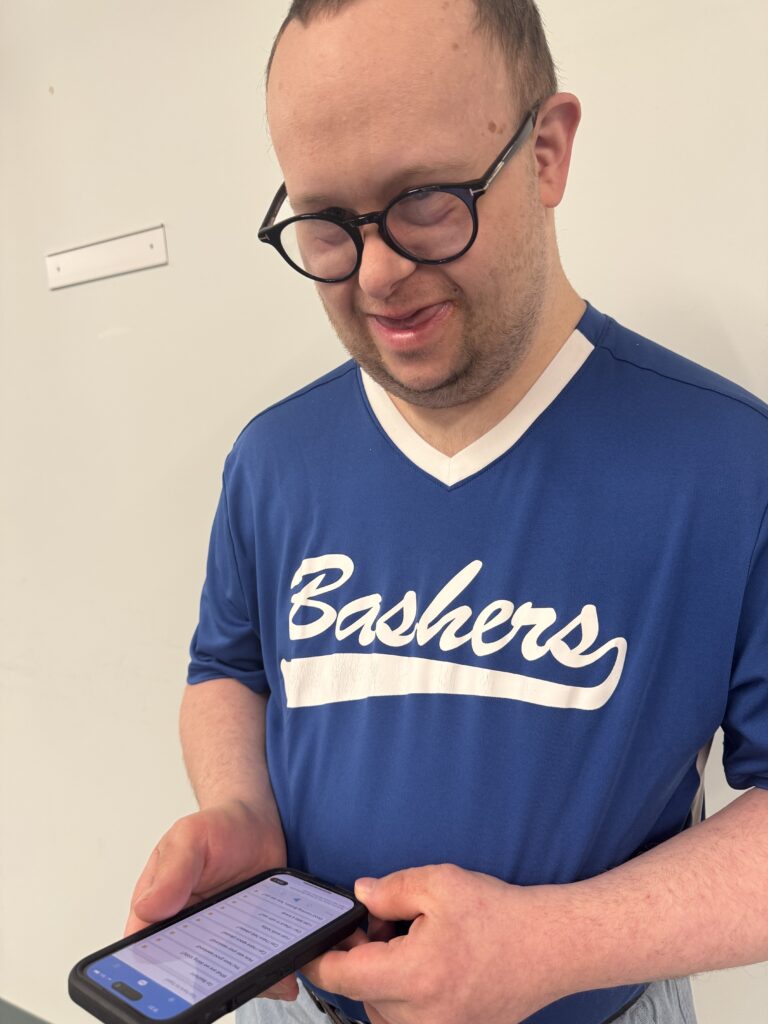
- Anthony, a Triangle participant who uses AAC, shared, “I really like the app and it helps me talk to staff and peers.”
- Community & Provider Education: We work closely with local employers, healthcare environments, and community partners to teach teams how to practice patience, build accessible environments, and dismantle implicit bias.
The Bottom Line
When we don’t to listen to diverse voices, our communities miss out on incredible talent, dedication, and perspective. Inclusion requires a continuous, collective effort to slow down, listen intentionally, and ensure everyone has an equal shot at being recognized and understood. You can directly support this work and help us amplify more voices in our community by making a donation to Triangle, Inc. today.